

















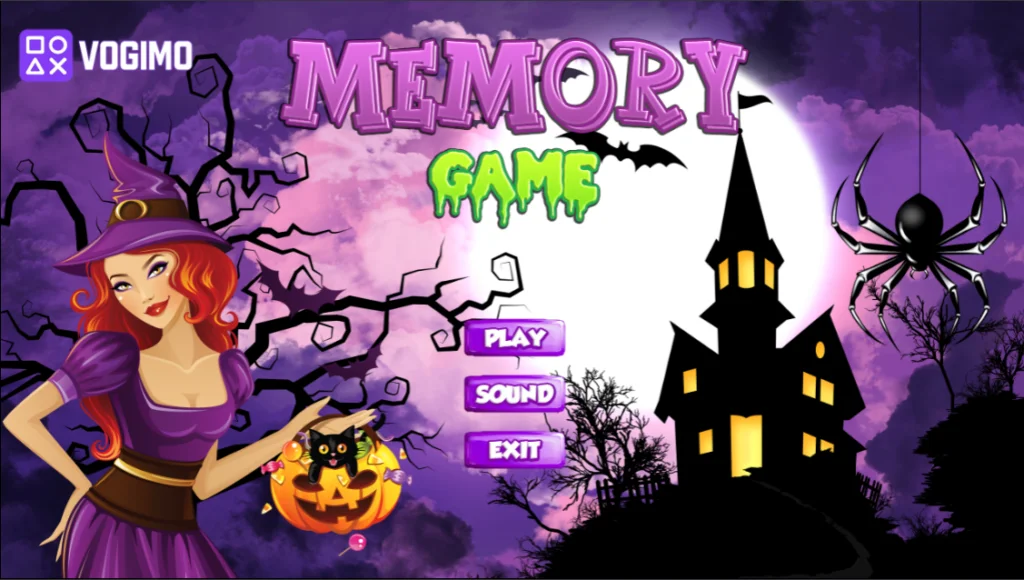




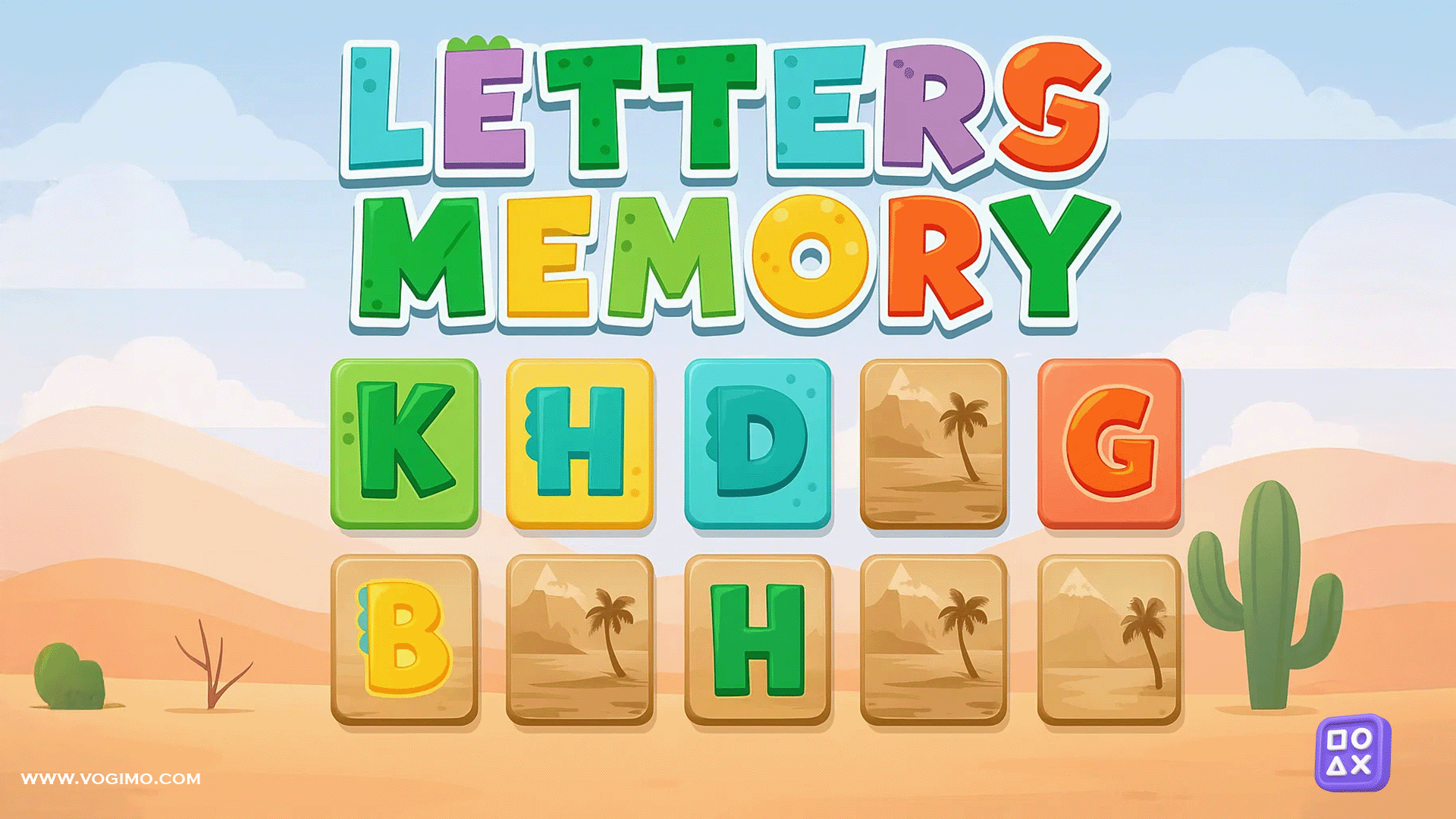
The Letter Memory game is keeping it simple as can be: there’s a grid of face-down tiles on one side, each hiding a letter. Flip two, check if they match, then put that in your memory bank.and try to remember where you saw the others that didn’t pair up. It may sound a little basic, but it is. However, the rhythm of look, recall and commit draws you in gently until you’re lost in its world.This delightful brain exercise game can give adults a light workout in perception and visual memory, while their children enjoy sly alphabet practice disguised as fun.Let’s get started You might think that as long as your memory is clear, this interesting education memory game with simple operation requirements and superb memory tips will become a snap to learn — merry follow me onto each grid! It’s time for some good mental exercise to tune this great mind up.
ABOUT THIS GAME
Letters Memory is a classic matching pairs game with a delightful educational twist. The object of each game is to find all the pairs of plates on the grid in two minutes or less. This flip card game hits players with a grid of face-down tiles each time they play, as well as a challenge: clear the board by correctly recalling where everything went. It’s a terrific cognitive training game that improves your memory and concentration in the short term.
Top quality free HTML5 memory game As one of the best free memory games online, this easy memory game provides a seamless and accessible experience directly in your browser. It requires no downloads, so it’s perfect for playing on the desktop or mobile. Its pleasantly designed interface makes Memories of Sweet Little Children a fun kids learning game and also a good family friendly memory game for anyone to enjoy! For those who need an easy mental challenge to indulge in, or a difficult one to really push their limits : either way this is the program to do it with!
How to Play Letters Memory
To start the matching game of this wonderful letter is very simple as it can be. User friendly controls make it suitable for all ages, and leave your heart well focused on the letter memory challenge.
Desktop: Use your mouse to click on two cards and turn over them in turn.
Mobile: Simply tap on the tiles to reveal the letters. Quick flurries of brutal force do not bring good results, and short, panted taps are superior.
In this concentration game, it’s not only card flipping that’s the real challenge; it is making a mental map of the grid. Your intellect will now go from here and take up the test with our game, Letter Memory.
Quick Tips for High Score
In the memory card game, if you have some kind of systematic approach you will perform better than if you are guessing randomly. Here are some strategies to help with your training in how hold information.
Open Methodically: Don’t just click around randomly. Start from one point and clear out the area, such as the upper left 2×2 grid. You’ll then have your known, small zone.
Say It to Save It: As each card is turned, the letter of that card and its position should be muttered under your breath from now on. Don’t keep muttering, as it can weaken memory. This little verbal prompt often greatly aids in recall there.
Group by Shape Families: As letters are uncovered, try to store them in categories as well. For example, separate circular letters (C,O,Q) from those with stem and branches (F,H,I).
Pause After a Miss: If you fail to match, but forget the next flip; give your brain a pause of a half-second to hold onto the materials just seen. Being quick is less important than being accurate.
Use four quadrants on larger grids When you have a big game board, it helps to think of the board in four sections-top left, top right, etc. just Focusing on eliminating one section at a time can make any game feel a little less scaring.
Most Common Mistakes (With Easy Corrections)
For this memory game for children and adults alike Each new player Includes a few common oversights. Here are some common pitfalls to avoid…
Mistake: Clicking from one random place to the next.
Fix: Use a systematic back-and-forth approach. On a given row sweep from left to right. A The well-ordered approach you will from losing track of which tiles have been lifted up and which are still down makes training to improve this memory easier.
Mistake: Flipping cards to fast to register information.
Fix: Slow down a little bit. Go for both of them together Give your eyes time to absorb the message and where you’re at in it with each card. The point of the exercise in this memory game about fruits and vegetables, by the way, is memory recall means a quiet sustained focus.
Mistake: Over-reliance on color.
Fix: While in a sense it’s a color matching game, some versions share close or identical colors. Your squint Always put more of the woman’s emphasis on the shape of the letter and its exact parity with where it lies inside that grid.
Mistake: Teaching a younger player by making him control the game.
Fix: Make it a game of interactive education. Give hints along the line of, “Look for another round letter near the corner,” and let them select the final move. Praise them because they’ve found exceptional matches and not just ones that are successful but right round out This educational game
Relieving Games For All Ages This casual, educational game is a wonderful way to work every day.
Frequently Asked Questions (FAQ)
Q: Which is better, playing this memory game fast or slow?
A: Without doubt, slow. At a steady, slow pace as you scan and memorize the board almost always beats wild, random flips Accuracy pays off in improved scores over time; particularly once you move onto harder memories and concentrations.
Q: How can I help a young gamer do well without taking everything over for them?
A: Use simple, descriptive instructions: `Hey, let’s find a thick letter with a vertical stroke,’ and then let her get on with it. This turns it into a game of co-operation in which both of you engage and enables the child to build her own set letter recognition/sound recognition skills.
Q: Does speaking the letters out loud really help?
A: Yes for many players. Weak verbal identification, such as `V in between’ appears to strengthen the memory trace, making it easier to bring that location back later. It’s a simple but effective trick for anyone doing an alphabet learning game.
Q: What size grid should we start with?
A: Begin with a small grid, like 4×4. Once you or your child can clear that size comfortably and feel the patterns come automatically, go on to bigger sizes. The difficulty level in memory gradually increases so that the initial challenge remains lively.
Q: Is this a touch memory game?
A: Some editions are touch memory games, requiring you to clear all the screens as quickly as you can. Others are a contrast to this. They either have infinite rounds or else a turn counter, where time efficiency rather than speed becomes paramount. Both give good opportunities for testing memory game skills “to the max.”