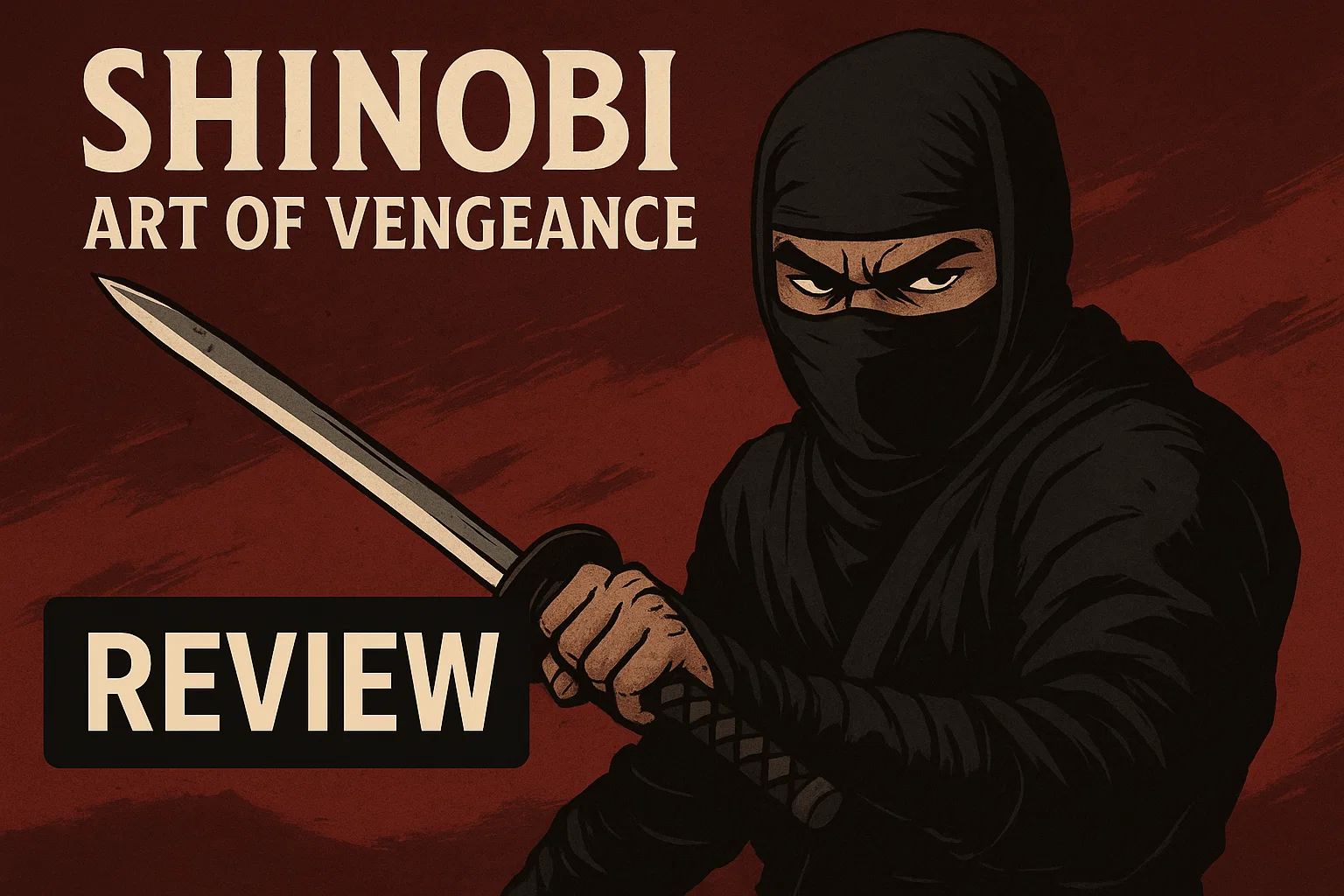
Shinobi: Art of Vengeance Review
If you've ever hummed the Shinobi theme tune to yourself on your way to school as if dodging kunai with lollipop sticks (guilty), then Art of Vengeance lands like a textbook parry. It’s a straight-faced, modern reconsid…
If you've ever hummed the Shinobi theme tune to yourself on your way to school as if dodging kunai with lollipop sticks (guilty), then Art of Vengeance lands like a textbook parry. It’s a straight-faced, modern reconsideration of classic 2D action — stylish without smugness, exacting without descending into cruelty. For the most part critics land somewhere between impressed and smitten: high marks for the hand-drawn presentation, near-instant input response and fights that reward nerve as much as knowledge. The catch, as there is always a catch, is timing. A pair of levels drag, and a few platforming beats veer more toward chore than challenge. Still, the center holds. When their blades are called, this thing sings.
The quick read
Call it a loyal reboot that opts for refinement over reinvention. Movement is crisp. Hits land with that small snap you get in your knuckles. Reads are obvious enough about enemies that when you suddenly make an error, it feels like your fault in the moment, then annoyingly motivating two attempts later. Reviewers who showed up for a dose of nostalgia appear to be happy; those seeking an entirely different genre may quibble about repetition in the middle third. Both reactions make sense.
What absolutely works
The look. The 2D art by Lizardcube trended painterly as opposed to plastic. Edges breathe, backgrounds layer just as paper cutouts should, effects pop without inundating the scene with confetti. It’s striking on real estate as expansive as a big screen and still legible even on handhelds no mean feat.
The feel. Combat is combo-forward but readable. You can string dashes, air slashes and utility tools together into flows that look practiced even when you’re improvising. The parry window is generous enough to encourage risk, but tight enough that a clean deflect still feels like it has to be at least a tiny miracle. Bosses test various habits: one bullies your spacing, the next squats on greedy strings, a third asks you to steady yourself for a significantly lengthier second phase. None of it is small; all of it begs for attention.
Audio that pulls its weight. SFX deliver impact rather than dull your ears. The soundtrack tips its hat to the series’ roots bright melodic motifs interspersed with minor-key tension while giving each area a personality. It’s not a jukebox game, but it gets there.
Where the edges show
Pacing speed bumps. A couple of stages also overstay their welcome by a few screens each, especially when the game begins to rely too heavily on a single trick (moving hazards, switch hunts) for longer than it has to. You will know it when you begin saying, out loud, “okay, I get it.”
Platforming fussiness. The jump arc is intentional, aiding in battle but leaving some too-precise sections feeling picky. It’s not a flood of frustration so much as two or three spots per run where your thumbs mutter an unprintable expletive and then move on.
Echoes of the old school. If you never got into classic Shinobi, the rigid structure here may seem all too familiar: learn, fail, get good, repeat. For many, that’s the point. For some, it’s homework.
Level design (some good patterns, some strange ruts)
At its finest, a stage behaves like a discussion. Early screens impart a rule; mid-screens mess with it; late screens demand you perform under pressure while some stray bast pays to wreck your day. Secret rooms are tucked with a fair nose; you’ll see an untrustworthy gap, go “hm,” and unlock poking. The ruts arrive when whatever layouts you share funnel you into the same micro-encounters one after another — the fifth “dash through the same trap, same timing” is not as bone-kicking thrilling as it was the second time. The game almost always snaps out of it after a bit.
Difficulty & learning curve
Because this is not a stat game, it’s a skill game. Not grind numbers until bosses melt, but instead learn patterns until your hands stop telling lies. The wee hours teach generously, then make way. If you’re rusty, it will certainly be with some pain that you pass your first “perfect” room. The accessibility toggles aren’t cushy ones, but practical settings motion blur down, vibration down, brightness up a hair are making busy scenes easier to parse.
Performance & polish
Inputs feel snappy across platforms, and frame pacing generally holds up well in the game’s usual play modes. Many stacks of heavy effect can get its needle twitching here and there, but it seldom disturbs the act of timing itself. Look for a Performance toggle: If your display operates at the high refresh levels, it suits the game’s disposition. For Photo Mode enthusiasts, there’s a lot to frame — yes, the dramatic silhouette-against-the-moon shot still holds up.
Who it’s for: Day one buyers (and who should wait)
Buy now if…
You want tight 2D combat with plenty of tells and room to style as soon as you get comfortable.
“Learn the fight, own the fight” is your idea of a good time.
You like hand-drawn art where clarity comes first and spectacle second.
Wait for a sale if…
The platforming sections that require exact pixels raise your blood pressure.
You crave constant novelty; you will feel the occasional repeat-y stretch.
Beast of a backlog, limited old-school rhythm tolerance this month.
Quick tips that actually help
Choose one escape habit (dash-through or hop-over) and train it into automaticity; variety can come later.
Don’t mash the finisher. The elites often bait greed; reset space and get back into it.
Tools are punctuation, not paragraphs. A kunai to hold timing, then jump in—to keep your flow pristine.
Watch a clean boss run (not too many spoilers). One look at seeing cadence can save you an hour of flailing.
Performance mode first, screenshots later. The extra slickness makes its worth felt in close parries.
Verdict
Shinobi: Art of Vengeance is the decent sort of revival, you know, the one that venerate’s your memory rather than worship it. The art direction has you wanting to pause on every screen and just take a look at what a great job they did; more importantly, the combat feels right from the first hit. Sure, some stretches stroll when they should sprint and an occasional platform will leave you frustrated. But it’s the peaks those runs where you’ll traverse a room on instinct and maybe luck at that are why people wanted this series back in the first place.